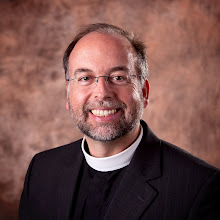
Sermon from February 13, 2011
(Epiphany 6 – Year A)
Deuteronomy 30: 15-20
St. Alban’s Episcopal Church, Waco, Texas
I just knew that if I watched TV long enough last Sunday night, I would get me some good sermon material.
After the unfortunate singing of the National Anthem by Christina Aguilera,
After the opening kick-off between the Steelers and the Packers,
After the retro-80s half-time show,
After all of that, the hit TV show Glee was back on for a brand new episode.
For those who do not know, Glee is a TV show on Fox about a high school glee club.
The glee club is filled with a menagerie of kids:
The disabled, the losers, the geeks, as well as a few kids who are also on the cheerleading squad and the football team.
In last Sunday night’s episode of Glee, 3 of the girls are in the glee club, as well as members of the cheerleading squad, under the tyrannical direction of Sue Sylvester.
Yet Sue Sylvester has scheduled the championship cheering competition for the exact same night that the glee club is to be performing the half-time show at the football championship.
The girls, Santana, Brittany and Quinn, must make definitive choice.
The girls can either be on the cheerleading squad –
Or they can be in the Glee club.
Puck, who is a football jock and also in the glee club, comes to talk with the girls.
Puck reminds the girls of the story, the narrative of how the glee club brings life.
Then he gives the girls a choice:
Do you find life and meaning as an up-tight cheerleader?
Or do you find that your heart sings with life when you are in the glee club?
Santana, Brittany and Quinn choose to perform at the half-time show with the glee club.
And the coach of the glee club, Mr. Shu, smiles from the sidelines, pleased that his kids have chosen what brings them life.
In the Old Testament book of Deuteronomy, the Hebrew people are presented with a choice.
The Hebrew people can choose to not follow God and to chase after idols.
Or the Hebrew people can choose God and his commandments of justice and love, which will bring them life.
In many ways, Moses has been the coach of the Hebrew people.
Moses led his people out of their slavery in Egypt and through the waters of the Red Sea on dry land.
Moses led the people in the desert for 40 years, striking a rock so that water would gush forth and calling down bread from heaven for them to eat.
And now Moses has led his people to the edge of the Promised Land.
Moses recalls the narrative, the story of his chosen people.
Then he asks them to make a choice, as Moses cries out in his farewell address:
“I have set before you life and death.
Choose life [by] loving the Lord your God, obeying him and holding fast to him.”
Last Sunday night in the episode of Glee, the jock named Puck recounts for the girls their story of singing, the narrative of their abundant life.
And then the girls are faced with a choice.
And Moses, the leader of the Hebrew people, recounts the exodus story, the narrative of their abundant life.
And then the Hebrew people are faced with a choice:
A choice to choose death and false idols by going their own way and not following God.
Or a choice to choose life, by loving the Lord and following his ways.
And this morning, my brothers and sisters, we are faced with a choice.
Do we listen to the story, the secular narrative that the world gives to us?
Or do we listen to the story, the sacred narrative that Jesus Christ gives to us?
Last week, I stumbled upon a piece of writing that I know is going to change my ministry.
The Rev. Paul Winton, rector of St. John’s Episcopal Church in Charlotte, North Carolina has written a paper, a paper that deals with the concern that our young people, as well as our older people, are not practicing the Christian faith.
This priest writes:
“What is obvious is that from Little League to the summer swim team phenomenon,
When parents are energetically engaged with their children in the actual enterprise…
These are the very enterprises that their children come to value…for a lifetime.”
This priest also writes this:
“The Sacred Narrative…has in fact been driven out by the secular narrative;
Principally the sports narrative.”
Last Wednesday night, Jimmy and I attended the Baylor men’s basketball game vs. Nebraska.
During a timeout in the game, cheerleaders ran down onto the court, carrying boxes of hot pizzas from Pizza Hut.
Those in the stands who cheered the loudest were given an opportunity to win a free pizza.
Consequently, children of all ages screamed at the top of their lungs.
Women began to squeal with excitement.
Fully-grown men jumped up and down like school girls, yelling:
“I want a pizza! I want a pizza!”
Jimmy turned to me and said:
“I just wish that people would get half this excited about receiving Communion.”
My friends, I am serious when I say this:
When we are more excited about receiving a free pizza at a basketball game than we are to receiving the bread of heaven,
Then we are not choosing life, but we are choosing to worship idols.
When we are more engaged and energized by the narrative of the Super Bowl than we are to the sacred story of Jesus’ resurrection that gives us eternal life,
Then we are not choosing life, but we are choosing to worship idols.
And as your pastor, as your spiritual coach, I am genuinely concerned.
And as Moses looked into the Promised Land, he was genuinely concerned, as well.
Moses was concerned that his people would choose to forget their sacred story, the exodus narrative, the story that God delivers us from slavery and feeds us in the wilderness and leads us to a land of promise.
And I am concerned that we will choose to forget, or never even know, our sacred story, the narrative of how Jesus sets us free from our bondage and feeds us with daily bread and leads us into the promised land of peace and justice for all.
Therefore, as your coach, as your leader, I see a perfect opportunity on the horizon for us to choose life, to choose to not forget our sacred narrative.
A perfect opportunity awaits to choose to not replace the sacred narrative with the narrative of sports or careers or upward mobility.
In one month, on Ash Wednesday, March 9th, the season of Lent will begin.
The 40-day season of Lent is the Episcopal Church’s version of a revival.
And during this upcoming season of Lent, we will re-double and revive our resolve to choose to say ‘no’ to death - and to the worship of the world’s idols.
We will choose to say ‘yes’ to life, by sharing and witnessing to our sacred story and by following Jesus all the way to his cross and his empty tomb.
So, choose life – and put more energy and enthusiasm into weekly worship and Sunday school and Bible study than you do for soccer practices or gymnastics or cheering at Little League games.
Choose life – and put more energy and enthusiasm into reading the sacred scriptures than you do for researching basketball teams to complete your March Madness brackets.
Choose life – and put more energy and enthusiasm into your practice of prayer than you do for your practice of jogging or bicycling or arm-chair quarterbacking.
The cheerleader girls on Glee had a choice.
The Hebrew people on the edge of the Promised Land had a choice.
And you have a choice:
To choose the secular story that the world gives;
Or to choose the sacred narrative of Jesus’ abundant life.
I am concerned about the choices you make.
Choose life.
Choose Jesus Christ.
AMEN.
Monday, February 14, 2011

Thursday, February 3, 2011
No Omitted Verses
As many of you know, in church on Sundays, we read scriptures that are appointed in the lectionary. The lectionary is a three-year cycle of readings; we read 4 selections each Sunday from the: Old Testament, Psalms, New Testament and Gospel. Many times, the selections may be shortened by not reading the portion that is in brackets. On the scriptures that are printed on the insert in the worship leaflet, these optional omissions are noted by green brackets.
It is my policy that we never omit these “optional” verses in our worship. I like to say: “When you think that you have heard enough scripture in your life, then we can talk about omitting verses!” And my experience is that the suggested omissions are sometimes the most troubling or interesting parts of scripture, which to me means that we should wrestle with them all the more!
This Sunday, if we omitted verses, then we would not hear about how we are called to be a “repairer of the breach (Isaiah)” or that “the wicked will see [the righteous] and be angry (Psalm)” or that “we have the mind of Christ (1 Corinthians).”
I am glad that we have so much to learn about God from the unbracketed – and the bracketed – verses of scripture.
It is my policy that we never omit these “optional” verses in our worship. I like to say: “When you think that you have heard enough scripture in your life, then we can talk about omitting verses!” And my experience is that the suggested omissions are sometimes the most troubling or interesting parts of scripture, which to me means that we should wrestle with them all the more!
This Sunday, if we omitted verses, then we would not hear about how we are called to be a “repairer of the breach (Isaiah)” or that “the wicked will see [the righteous] and be angry (Psalm)” or that “we have the mind of Christ (1 Corinthians).”
I am glad that we have so much to learn about God from the unbracketed – and the bracketed – verses of scripture.
Tuesday, February 1, 2011
The Road Less Traveled
When I was in the fifth grade, and just about to leave the comfortable confines of elementary school to move on to the big, bad world of junior high school, the school librarian, Mrs. Marks, read us a poem. The poem that she read to us was Robert Frost’s famous, “The Road Not Taken.”
“Two roads diverged in a wood, and I—I took the one less traveled by,
And that has made all the difference.”
When I entered into junior high school, I was certainly faced with choices, choices regarding classes and cigarettes and drugs. Throughout my life, I have been aware that there are two roads that diverge in the wood. And I have discovered that the road less traveled has made all the difference in my life.
In the Gospel of John, Jesus proclaims to his followers that he alone is the Bread of Life, that we must eat this bread, that we must believe in him, that we must consume him and eat him and feed on him in order to live an abundant life. This teaching is too difficult to swallow; therefore, many of his followers choose the road more traveled and leave Jesus behind.
Yet a small group of followers choose the road less traveled. His closest followers ask Jesus: “Lord, to whom else can we go?” They realize that their options are limited; there is no better option in life than to believe in Jesus, for by choosing that road, it has made all the difference.
Each and every day, we see two roads that diverge in the wood. And we must make a choice: do we take the road that the world says leads to life? Or, do we take the road less traveled, the road where Jesus’ teaching is difficult, the road that asks us to give up everything, the road that calls us to lay down our life for our friends, the road where we eat the flesh and drink the blood of Jesus so that the Bread of Life may dwell in us, and we in him?
As your pastor, I have promised God and you that I will show you that there are two roads that diverge in the woods. You do have a choice. Yet as your spiritual leader, it is my joy when I see you choose the road less traveled.
When I see you choosing to study the Gospel of John, when I see you opening the Bible with your teenager in the youth room, when I see you washing dishes in the parish hall kitchen after a Sunday lunch, when I see you singing in the choir room every Wednesday night, when I see you pulling into the parking lot every Sunday to eat the bread of heaven that gives life to the world, when I see you taking the road less traveled, then it is my joy to know that you are choosing the road to abundant and eternal life.
Take the road less traveled by. Choose Jesus. For he has made all the difference.
“Two roads diverged in a wood, and I—I took the one less traveled by,
And that has made all the difference.”
When I entered into junior high school, I was certainly faced with choices, choices regarding classes and cigarettes and drugs. Throughout my life, I have been aware that there are two roads that diverge in the wood. And I have discovered that the road less traveled has made all the difference in my life.
In the Gospel of John, Jesus proclaims to his followers that he alone is the Bread of Life, that we must eat this bread, that we must believe in him, that we must consume him and eat him and feed on him in order to live an abundant life. This teaching is too difficult to swallow; therefore, many of his followers choose the road more traveled and leave Jesus behind.
Yet a small group of followers choose the road less traveled. His closest followers ask Jesus: “Lord, to whom else can we go?” They realize that their options are limited; there is no better option in life than to believe in Jesus, for by choosing that road, it has made all the difference.
Each and every day, we see two roads that diverge in the wood. And we must make a choice: do we take the road that the world says leads to life? Or, do we take the road less traveled, the road where Jesus’ teaching is difficult, the road that asks us to give up everything, the road that calls us to lay down our life for our friends, the road where we eat the flesh and drink the blood of Jesus so that the Bread of Life may dwell in us, and we in him?
As your pastor, I have promised God and you that I will show you that there are two roads that diverge in the woods. You do have a choice. Yet as your spiritual leader, it is my joy when I see you choose the road less traveled.
When I see you choosing to study the Gospel of John, when I see you opening the Bible with your teenager in the youth room, when I see you washing dishes in the parish hall kitchen after a Sunday lunch, when I see you singing in the choir room every Wednesday night, when I see you pulling into the parking lot every Sunday to eat the bread of heaven that gives life to the world, when I see you taking the road less traveled, then it is my joy to know that you are choosing the road to abundant and eternal life.
Take the road less traveled by. Choose Jesus. For he has made all the difference.
Sunday, January 23, 2011
Foolish Cross
Sermon from January 23, 2011
(Epiphany 3 – Year A)
1 Corinthians 1: 10-18
St. Alban’s Episcopal Church, Waco, Texas
As a preacher, it is always nice when the biblical passage for the appointed Sunday includes one of his favorite verses in Holy Scripture.
In the selection from Paul’s First Letter to the Corinthians, Paul is chastising the people of Corinth for dividing themselves into factions.
The Apostle Paul tells the people of Corinth that they are to be united, united around one, single unifying purpose.
Now I believe that many people erroneously interpret Paul as saying that we need to be united around issues, issues such as abortion or gun control or politics.
However, I don’t believe that Paul wants us to be united around issues.
I believe that Paul wants us to be united around one single, foolish purpose:
We are to be united around the powerful Cross of Christ.
And the Apostle Paul concludes his argument with one of my favorite verses from scripture:
For the message about the cross is foolishness to those who are perishing,
But to us who are being saved it is the power of God.
Last Sunday at St. Alban’s, we started our brand new, weekly, 5:00 PM Sunday Eucharist.
This new 5:00 o’clock service is now being held every Sunday in the Mahan Commons, in the St. Alban’s Outreach Center.
Jimmy and I spent a lot of time to find a song leader for this service who can lead us in both traditional and contemporary music on the guitar.
Jimmy and I spent a lot of time thinking about the Commons, which was formerly the school library, re-imagining it as a regular worship space, re-arranging the chairs and the altar to give it just the right feel of being casual, yet intimate and dignified.
Claudia Bachofen led the creative effort to make 12 beautiful quilts that depict scriptural scenes, quilts that now hang in the Commons and look classic.
The altar was set up in the midst of the people with a simple white linen cloth and candles.
Last Sunday, Jimmy and I had the Commons looking just the way we wanted it to for our inaugural 5 o’clock service.
Afterward, the reviews of the worship were wonderful.
The Holy Spirit had been tangibly present in that room.
Yet I have received one comment that I have found extremely interesting.
Several people who attended last week’s 5 o’clock service have noted the sublime beauty of the Commons, but they have also asked this powerful question:
But where in that room is the Cross?
For the message about the cross is foolishness to those who are perishing,
But to us who are being saved it is the power of God.
For to the world, the Word on the Cross is foolish and stupid.
But to us, to us who are being saved from this world, the Cross is our one, single, unifying purpose.
When I was growing up as a kid in the Episcopal Church, I served as an acolyte, carrying a torch or the cross in Sunday worship.
One Sunday afternoon when I was 16 years old, Mr. Mitchell, who was the adult in charge of the acolytes, called me at home on the telephone.
He inquired:
“Jeff, you know Rodney Wilson, don’t you?
He is another one of the acolytes.”
I replied.
“Yes, I know Rodney, but not very well.
He usually likes to acolyte at the early service.”
Mr. Mitchell then continued:
“Well, Jeff, I don’t know how to say this, but Rodney Wilson is dead.
Rodney was cleaning his gun with his father and the gun accidently went off, killing him.”
I was silent on the other end of the phone.
I had never known of another kid to die before.
Mr. Mitchell then continued:
“I have spoken with Rodney’s mother and she told me how much Rodney loved being an acolyte.
Therefore, Mrs. Wilson has requested that the pallbearers for Rodney’s funeral are to be his fellow acolytes.
And she wanted you to be one of Rodney’s pallbearers and to carry his casket.
Can you please get out of school at go to the church, then to Forest Lawn Cemetery, at 2 o’clock on Tuesday?”
I quietly replied:
“Yes, Mr. Mitchell.
I will be there.”
I will never forget that Tuesday afternoon.
I remember that I got out of my chemistry class early in order to leave school and go to Rodney Wilson’s funeral.
After the church service, as Rodney’s body was carried out of the church, the processional cross, carried by one of acolytes, led us out.
Then I witnessed something at that funeral that was quite different, something I have not seen very often at all, even in all the many funerals that I have officiated at since I have been a priest.
And the unusual thing was this:
Mrs. Wilson, Rodney’s mother, insisted that the brass processional cross be placed into the casket coach, next to the coffin, to make the journey to the cemetery with the body.
And at the cemetery, Mrs. Wilson insisted that the Cross lead Rodney’s body to the grave and that the Cross remain with his body until the end.
In those days, acolytes were mainly all boys.
And 8 of us teenaged boys served as pallbearers, dressed in navy blazers and clip-on ties, struggling to carry our brother, Rodney, to his grave.
I am sure that we looked foolish, trying to act like brave men.
Yet we were really just scared and weak boys, struggling under the weight of the coffin in the soft grass.
However, to the world, the most foolish thing of all was seeing that powerful and unifying cross, bravely lifted up, as we proclaimed “Alleluia” at the edge of the grave of a teen-aged boy who accidently shot himself while cleaning his gun.
For the message about the cross is foolishness to those who are perishing,
But to us who are being saved it is the power of God.
You see, to the world, the cross means stupid foolishness and a blind faith in a God whom cannot be seen.
But to us who are being saved, the Cross of Jesus is the unifying power of resurrection and forgiveness and love.
To the world, the cross is the sign of a stupid failure, the total failure of Jesus’ work and ministry.
But to us who are being saved, the Cross of Jesus gives us power, power to overcome when we get broken or when we get laid off or when we mess up or when we accidentally shoot ourselves in the foot.
To the world, this piece of wood that hangs over the altar at St. Alban’s is an instrument of death and capital punishment, much like an electric chair or a noose.
But to us who are being saved, this carved piece of wood that hangs over the altar is the greatest sign of God’s unifying, loving purpose for us, showing us that nothing will ever, ever, ever, separate us from God’s power of love.
You see, Camille Webb Ward, a founder of this church, carved that cross that hangs over the altar here.
And, did you know, that Mrs. Ward also carved a smaller cross, a cross that used to hang over in St. Alban’s School?
I have listened to the voices of those who are being saved.
So next week, Mrs. Ward’s smaller carved wooden cross will be hung above the altar in the Mahan Commons, the site of our new 5 o’clock service.
And when I die, I want you all to remind Susan that I want that brass processional cross to be put in the casket coach with my body,
And I want that Cross of Jesus to stand powerfully and foolishly at the edge of my grave.
For even at the grave, we make our unifying song:
Alleluia, alleluia, alleluia.
For the message about the cross is foolishness to those who are perishing,
But to us who are being saved
It is the power of God.
AMEN.
(Epiphany 3 – Year A)
1 Corinthians 1: 10-18
St. Alban’s Episcopal Church, Waco, Texas
As a preacher, it is always nice when the biblical passage for the appointed Sunday includes one of his favorite verses in Holy Scripture.
In the selection from Paul’s First Letter to the Corinthians, Paul is chastising the people of Corinth for dividing themselves into factions.
The Apostle Paul tells the people of Corinth that they are to be united, united around one, single unifying purpose.
Now I believe that many people erroneously interpret Paul as saying that we need to be united around issues, issues such as abortion or gun control or politics.
However, I don’t believe that Paul wants us to be united around issues.
I believe that Paul wants us to be united around one single, foolish purpose:
We are to be united around the powerful Cross of Christ.
And the Apostle Paul concludes his argument with one of my favorite verses from scripture:
For the message about the cross is foolishness to those who are perishing,
But to us who are being saved it is the power of God.
Last Sunday at St. Alban’s, we started our brand new, weekly, 5:00 PM Sunday Eucharist.
This new 5:00 o’clock service is now being held every Sunday in the Mahan Commons, in the St. Alban’s Outreach Center.
Jimmy and I spent a lot of time to find a song leader for this service who can lead us in both traditional and contemporary music on the guitar.
Jimmy and I spent a lot of time thinking about the Commons, which was formerly the school library, re-imagining it as a regular worship space, re-arranging the chairs and the altar to give it just the right feel of being casual, yet intimate and dignified.
Claudia Bachofen led the creative effort to make 12 beautiful quilts that depict scriptural scenes, quilts that now hang in the Commons and look classic.
The altar was set up in the midst of the people with a simple white linen cloth and candles.
Last Sunday, Jimmy and I had the Commons looking just the way we wanted it to for our inaugural 5 o’clock service.
Afterward, the reviews of the worship were wonderful.
The Holy Spirit had been tangibly present in that room.
Yet I have received one comment that I have found extremely interesting.
Several people who attended last week’s 5 o’clock service have noted the sublime beauty of the Commons, but they have also asked this powerful question:
But where in that room is the Cross?
For the message about the cross is foolishness to those who are perishing,
But to us who are being saved it is the power of God.
For to the world, the Word on the Cross is foolish and stupid.
But to us, to us who are being saved from this world, the Cross is our one, single, unifying purpose.
When I was growing up as a kid in the Episcopal Church, I served as an acolyte, carrying a torch or the cross in Sunday worship.
One Sunday afternoon when I was 16 years old, Mr. Mitchell, who was the adult in charge of the acolytes, called me at home on the telephone.
He inquired:
“Jeff, you know Rodney Wilson, don’t you?
He is another one of the acolytes.”
I replied.
“Yes, I know Rodney, but not very well.
He usually likes to acolyte at the early service.”
Mr. Mitchell then continued:
“Well, Jeff, I don’t know how to say this, but Rodney Wilson is dead.
Rodney was cleaning his gun with his father and the gun accidently went off, killing him.”
I was silent on the other end of the phone.
I had never known of another kid to die before.
Mr. Mitchell then continued:
“I have spoken with Rodney’s mother and she told me how much Rodney loved being an acolyte.
Therefore, Mrs. Wilson has requested that the pallbearers for Rodney’s funeral are to be his fellow acolytes.
And she wanted you to be one of Rodney’s pallbearers and to carry his casket.
Can you please get out of school at go to the church, then to Forest Lawn Cemetery, at 2 o’clock on Tuesday?”
I quietly replied:
“Yes, Mr. Mitchell.
I will be there.”
I will never forget that Tuesday afternoon.
I remember that I got out of my chemistry class early in order to leave school and go to Rodney Wilson’s funeral.
After the church service, as Rodney’s body was carried out of the church, the processional cross, carried by one of acolytes, led us out.
Then I witnessed something at that funeral that was quite different, something I have not seen very often at all, even in all the many funerals that I have officiated at since I have been a priest.
And the unusual thing was this:
Mrs. Wilson, Rodney’s mother, insisted that the brass processional cross be placed into the casket coach, next to the coffin, to make the journey to the cemetery with the body.
And at the cemetery, Mrs. Wilson insisted that the Cross lead Rodney’s body to the grave and that the Cross remain with his body until the end.
In those days, acolytes were mainly all boys.
And 8 of us teenaged boys served as pallbearers, dressed in navy blazers and clip-on ties, struggling to carry our brother, Rodney, to his grave.
I am sure that we looked foolish, trying to act like brave men.
Yet we were really just scared and weak boys, struggling under the weight of the coffin in the soft grass.
However, to the world, the most foolish thing of all was seeing that powerful and unifying cross, bravely lifted up, as we proclaimed “Alleluia” at the edge of the grave of a teen-aged boy who accidently shot himself while cleaning his gun.
For the message about the cross is foolishness to those who are perishing,
But to us who are being saved it is the power of God.
You see, to the world, the cross means stupid foolishness and a blind faith in a God whom cannot be seen.
But to us who are being saved, the Cross of Jesus is the unifying power of resurrection and forgiveness and love.
To the world, the cross is the sign of a stupid failure, the total failure of Jesus’ work and ministry.
But to us who are being saved, the Cross of Jesus gives us power, power to overcome when we get broken or when we get laid off or when we mess up or when we accidentally shoot ourselves in the foot.
To the world, this piece of wood that hangs over the altar at St. Alban’s is an instrument of death and capital punishment, much like an electric chair or a noose.
But to us who are being saved, this carved piece of wood that hangs over the altar is the greatest sign of God’s unifying, loving purpose for us, showing us that nothing will ever, ever, ever, separate us from God’s power of love.
You see, Camille Webb Ward, a founder of this church, carved that cross that hangs over the altar here.
And, did you know, that Mrs. Ward also carved a smaller cross, a cross that used to hang over in St. Alban’s School?
I have listened to the voices of those who are being saved.
So next week, Mrs. Ward’s smaller carved wooden cross will be hung above the altar in the Mahan Commons, the site of our new 5 o’clock service.
And when I die, I want you all to remind Susan that I want that brass processional cross to be put in the casket coach with my body,
And I want that Cross of Jesus to stand powerfully and foolishly at the edge of my grave.
For even at the grave, we make our unifying song:
Alleluia, alleluia, alleluia.
For the message about the cross is foolishness to those who are perishing,
But to us who are being saved
It is the power of God.
AMEN.
Friday, January 21, 2011
I Can't Say That!
In preparation for Sundays, I do quite a bit of reading and research on the biblical lessons that will be read for that Sunday. The book “Feasting on the Word: Preaching the Revised Common Lectionary” is a resource that I use every week. In that book, in the entry for this week’s scriptures, Greg Garrett writes about the Gospel for today. Greg was educated at the Episcopal Seminary of the Southwest in Austin, yet teaches English here in Waco at Baylor.
Greg writes to preachers, instructing me and others who will be in the pulpit today: “Do not be afraid to use Jesus’ radical call – and the radical response of the first disciples – to call your own congregation to give all that they have for something worth infinitely more.”
Upon reading the above sentence, my first thought was fearful, saying to myself: “I can’t say those kinds of things to my congregation!” Yet, on second thought, maybe I should.
So give up a night this week to come to the Gospel of John study; give up your time to our partners in the Outreach Center; give up everything in your wallet this Sunday and put it in the offering plate.
Give up all that you have for something worth infinitely more.
Greg writes to preachers, instructing me and others who will be in the pulpit today: “Do not be afraid to use Jesus’ radical call – and the radical response of the first disciples – to call your own congregation to give all that they have for something worth infinitely more.”
Upon reading the above sentence, my first thought was fearful, saying to myself: “I can’t say those kinds of things to my congregation!” Yet, on second thought, maybe I should.
So give up a night this week to come to the Gospel of John study; give up your time to our partners in the Outreach Center; give up everything in your wallet this Sunday and put it in the offering plate.
Give up all that you have for something worth infinitely more.
Wednesday, January 19, 2011
Something Better
Sermon from January 16, 2011
(Epiphany 2 – Year A)
John 1: 29-41
St. Alban’s Episcopal Church, Waco, Texas
What are you looking for?
In the Gospel of John, the first thing out of Jesus’ mouth, the very first words that are uttered by Jesus in this whole Gospel, is this question:
What are you looking for?
John the Baptist glances at Jesus walking by and John tells two of his own followers:
“Look! Here is the Lamb of God!”
And those disciples then follow Jesus.
To which Jesus turns around and asks:
“What are you looking for?”
The disciples of John the Baptist now seem ready to switch their allegiance to Jesus, and these new disciples ask Jesus an odd little question:
“Rabbi, Teacher, where are you staying?”
And then Jesus answers:
“Come and see.”
So the first two disciples do come and see what they have been looking for, something better than they could ever imagine.
The writer of the Gospel of John tells us a seemingly unimportant detail, a detail that it is four o’clock in the afternoon.
This means that it was far too late in the day to begin the journey on to the next town.
So Andrew and the other new disciple stay with Jesus through the night, sitting down to a long meal over a bottle of wine, telling jokes with Jesus late into the night and waking up to a leisurely breakfast of pancakes and warm maple syrup with the Lamb of God, the Messiah.
Jesus asks his first followers:
What are you looking for?
And after a day and a night with Jesus, they discover what they are looking for.
They discover something better.
They discover the Word of God made flesh.
So Andrew runs to tell his brother, Simon:
“We have found the Messiah.”
We have found something better.
What are you looking for?
I know that I am always looking for something better.
For starters, I am looking for better weather on Sunday mornings!
I also know that when I am at my house and lying on the couch watching TV in the den, Susan just hates it when I am in-charge of the remote control.
She and I will settle in to watch a good movie that we are both enjoying.
Then a commercial comes on the screen, and I immediately begin to flip through channels using the remote.
Susan chastises me for this behavior, yelling:
“What are you doing?
I thought you were liking that show!”
To which I respond:
“I’m liking the movie.
But I just thought I’d see if there was something better.”
What am I looking for?
I am looking for something better.
In 1863, in the depths of the American Civil War, the people of the United States were killing each other in the deadliest war ever fought on American soil.
People with black skin were held in slavery.
Years of sectarian thought and violence had ripped this country into shreds.
We were looking for something better.
So in the midst of dead bodies on the Pennsylvanian fields of Gettysburg, Abraham Lincoln rose up to give us a vision of something better.
Abraham Lincoln preached about a vision, a vision of a better people, a nation that “shall have a new birth of freedom,
[Where] government of the people, by the people, for the people, shall not perish from the earth.”
One hundred years later, in 1963, the people of the United States were still treated unequally, based upon the color of their skin.
Violent terrorism and fearful prejudice reared its ugly head.
We were looking for something better.
So on the steps of the Lincoln Memorial, Martin Luther King, Jr. rose up to give us a vision of something better, a vision of a better people, “a nation where [people] will not be judged by the color of their skin, but by the content of their character.”
Last week, the city of Tucson, Arizona was devastated by the attempted assassination of Gabrielle Giffords and by the killing and wounding of 19 by-standers.
Partisan rhetoric quickly filled the airwaves.
We were looking for something better.
And in response, last Wednesday night, our current President Barack Obama rose up to give us a vision that we can be better, a challenge “to sharpen our instincts for empathy” and to not be driven by reactionary politics on both the extreme left and the extreme right, but to be a better people who are driven by kindness and love.
What are we looking for?
The people on the battlefield of Gettysburg were looking for something better, a better world where people are not divided into slave and free and Yankee and Confederate.
The people on the steps of the Lincoln Memorial were looking for something better, a better world where people are not labeled as blacks and whites.
The people in Tucson and across this great land are looking for something better, a better and healthier world that is not molded by extremists or Rachel Maddow or Glenn Beck or the relentless news cycle.
And the people who followed John the Baptist’s message of repentance from sins were looking for something better,
A better world that is not centered on sin and the law, but is centered on love and forgiveness and grace.
Why are you here this morning?
What are you looking for?
You must be looking for something better - or else you wouldn’t be here today.
As for me, I here this morning because I am looking for something better.
I am here this morning because I am looking for an abundant life that is greater than my sins and shortcomings.
I am here this morning because I am looking for inspiration to sharpen my instincts for empathy and love toward others.
I am here this morning because I want to encounter this man named Jesus, the Lamb of God who takes away the sin of the world.
I am here this morning to worship and pray and learn and stay and abide with Jesus, the Messiah, the loving Word made flesh.
I am here today because my family and my friends and you – all of you – have told me:
We have found the Messiah.
Come and see.
Yes, my friends, I am here this morning because I am looking for something better - and his name is Jesus.
And each and every day, we find and are found by him whose first question to us is this:
What are you looking for?
Each and every day, we find and are found by Jesus, who gives us life, an abundant life that is so much better than a life of violence and discrimination and political posturing and addiction and loneliness and materialism.
And each and every day Jesus invites us to stay with him, to abide with him, to sit up at night with him over a beverage and to receive a vision of something better, a vision of a better world filled with grace and truth and love.
What are you looking for?
We have found the Messiah, the loving Word made flesh.
So come and see
Something better.
AMEN.
(Epiphany 2 – Year A)
John 1: 29-41
St. Alban’s Episcopal Church, Waco, Texas
What are you looking for?
In the Gospel of John, the first thing out of Jesus’ mouth, the very first words that are uttered by Jesus in this whole Gospel, is this question:
What are you looking for?
John the Baptist glances at Jesus walking by and John tells two of his own followers:
“Look! Here is the Lamb of God!”
And those disciples then follow Jesus.
To which Jesus turns around and asks:
“What are you looking for?”
The disciples of John the Baptist now seem ready to switch their allegiance to Jesus, and these new disciples ask Jesus an odd little question:
“Rabbi, Teacher, where are you staying?”
And then Jesus answers:
“Come and see.”
So the first two disciples do come and see what they have been looking for, something better than they could ever imagine.
The writer of the Gospel of John tells us a seemingly unimportant detail, a detail that it is four o’clock in the afternoon.
This means that it was far too late in the day to begin the journey on to the next town.
So Andrew and the other new disciple stay with Jesus through the night, sitting down to a long meal over a bottle of wine, telling jokes with Jesus late into the night and waking up to a leisurely breakfast of pancakes and warm maple syrup with the Lamb of God, the Messiah.
Jesus asks his first followers:
What are you looking for?
And after a day and a night with Jesus, they discover what they are looking for.
They discover something better.
They discover the Word of God made flesh.
So Andrew runs to tell his brother, Simon:
“We have found the Messiah.”
We have found something better.
What are you looking for?
I know that I am always looking for something better.
For starters, I am looking for better weather on Sunday mornings!
I also know that when I am at my house and lying on the couch watching TV in the den, Susan just hates it when I am in-charge of the remote control.
She and I will settle in to watch a good movie that we are both enjoying.
Then a commercial comes on the screen, and I immediately begin to flip through channels using the remote.
Susan chastises me for this behavior, yelling:
“What are you doing?
I thought you were liking that show!”
To which I respond:
“I’m liking the movie.
But I just thought I’d see if there was something better.”
What am I looking for?
I am looking for something better.
In 1863, in the depths of the American Civil War, the people of the United States were killing each other in the deadliest war ever fought on American soil.
People with black skin were held in slavery.
Years of sectarian thought and violence had ripped this country into shreds.
We were looking for something better.
So in the midst of dead bodies on the Pennsylvanian fields of Gettysburg, Abraham Lincoln rose up to give us a vision of something better.
Abraham Lincoln preached about a vision, a vision of a better people, a nation that “shall have a new birth of freedom,
[Where] government of the people, by the people, for the people, shall not perish from the earth.”
One hundred years later, in 1963, the people of the United States were still treated unequally, based upon the color of their skin.
Violent terrorism and fearful prejudice reared its ugly head.
We were looking for something better.
So on the steps of the Lincoln Memorial, Martin Luther King, Jr. rose up to give us a vision of something better, a vision of a better people, “a nation where [people] will not be judged by the color of their skin, but by the content of their character.”
Last week, the city of Tucson, Arizona was devastated by the attempted assassination of Gabrielle Giffords and by the killing and wounding of 19 by-standers.
Partisan rhetoric quickly filled the airwaves.
We were looking for something better.
And in response, last Wednesday night, our current President Barack Obama rose up to give us a vision that we can be better, a challenge “to sharpen our instincts for empathy” and to not be driven by reactionary politics on both the extreme left and the extreme right, but to be a better people who are driven by kindness and love.
What are we looking for?
The people on the battlefield of Gettysburg were looking for something better, a better world where people are not divided into slave and free and Yankee and Confederate.
The people on the steps of the Lincoln Memorial were looking for something better, a better world where people are not labeled as blacks and whites.
The people in Tucson and across this great land are looking for something better, a better and healthier world that is not molded by extremists or Rachel Maddow or Glenn Beck or the relentless news cycle.
And the people who followed John the Baptist’s message of repentance from sins were looking for something better,
A better world that is not centered on sin and the law, but is centered on love and forgiveness and grace.
Why are you here this morning?
What are you looking for?
You must be looking for something better - or else you wouldn’t be here today.
As for me, I here this morning because I am looking for something better.
I am here this morning because I am looking for an abundant life that is greater than my sins and shortcomings.
I am here this morning because I am looking for inspiration to sharpen my instincts for empathy and love toward others.
I am here this morning because I want to encounter this man named Jesus, the Lamb of God who takes away the sin of the world.
I am here this morning to worship and pray and learn and stay and abide with Jesus, the Messiah, the loving Word made flesh.
I am here today because my family and my friends and you – all of you – have told me:
We have found the Messiah.
Come and see.
Yes, my friends, I am here this morning because I am looking for something better - and his name is Jesus.
And each and every day, we find and are found by him whose first question to us is this:
What are you looking for?
Each and every day, we find and are found by Jesus, who gives us life, an abundant life that is so much better than a life of violence and discrimination and political posturing and addiction and loneliness and materialism.
And each and every day Jesus invites us to stay with him, to abide with him, to sit up at night with him over a beverage and to receive a vision of something better, a vision of a better world filled with grace and truth and love.
What are you looking for?
We have found the Messiah, the loving Word made flesh.
So come and see
Something better.
AMEN.
Tuesday, January 18, 2011
Change
Written on the back of the worship leaflet for Sunday, January 16, 2011:
Change. The word that strikes fear into the hearts of so many of us, especially in the church. People will sometimes chuckle at jokes about how people in the church are resistant to change. I no longer find those jokes to be funny because I have found that people and churches and organizations who refuse to change are refusing to grow and live the abundant life that God calls us to. Adamant resistance to change is the hammer that nails us into our coffins of fear and sameness and death.
I no longer find “jokes” about change to be funny because my reading of Holy Scripture shows me that change and transformation are absolutely at the core of the message that Jesus preaches! The first followers of Jesus, whom we hear about in today’s reading from the Gospel of John, embrace change. The church was born, not in fear of change, but out of a full embrace of the transformation of lives!
Today is a day of huge change at St. Alban’s; we are offering a new weekly worship service here at 5:00 PM each and every Sunday. Today is the day when we refuse to laugh at jokes about our fear of change, as we give the gift of worship to more and more people in our city. Today is the day when we are transformed! Today, I love change!
Change. The word that strikes fear into the hearts of so many of us, especially in the church. People will sometimes chuckle at jokes about how people in the church are resistant to change. I no longer find those jokes to be funny because I have found that people and churches and organizations who refuse to change are refusing to grow and live the abundant life that God calls us to. Adamant resistance to change is the hammer that nails us into our coffins of fear and sameness and death.
I no longer find “jokes” about change to be funny because my reading of Holy Scripture shows me that change and transformation are absolutely at the core of the message that Jesus preaches! The first followers of Jesus, whom we hear about in today’s reading from the Gospel of John, embrace change. The church was born, not in fear of change, but out of a full embrace of the transformation of lives!
Today is a day of huge change at St. Alban’s; we are offering a new weekly worship service here at 5:00 PM each and every Sunday. Today is the day when we refuse to laugh at jokes about our fear of change, as we give the gift of worship to more and more people in our city. Today is the day when we are transformed! Today, I love change!
Subscribe to:
Posts (Atom)